






The European Space Agency took in 2015 the initiative to organize a course for professionals operating in the sector of optical engineering for Space. Two types of courses are organized: one dedicated to space optics instrument design and the other space optics instrument technology. The two courses are organised alternatively, one per year. The course of 2027 is targeted at space optics instrument design.
The team of lecturers consists of professionals with a long-standing experience in the sector. Their accessibility during the course, gives the participants a unique opportunity to deepen their knowledge with one-to-one meetings aside from the planned lectures.
The venue hosting students and lecturers gives plenty of opportunities to develop a professional network. Sharing problems and discussing solutions together is the way to build a community of space optical engineers enabling and fostering growth in the space sector as a whole.
The contracted venue is again the Colonna Resort Porto Cervo, close to Olbia – Sardinia (Italy) https://www.colonnaresort.com/en.
Registration for this course will be managed by the ESA Conference Bureau. As in previous years, registration will open at the beginning of November 2026.
The 2027 course will focus on the Space Optics Instrument Design process. All aspects and fields, important for the development of a successful optical payload will be addressed and its field interaction will be illustrated. This will help young engineers working as an optical-, mechanical-, thermal-, AIT-, PA-engineer or manager to broaden their view and to better understand the interaction of the different areas and the complexity of the optical payload development.
An 8-hour training on Zemax optical design software is included in the curriculum. A beginner and an advanced class will be offered to ensure that participants gain the maximum benefit from these sessions. The beginner class will cover the first steps in optical design, while the advanced class will focus on applications with IR optics and an introduction to straylight analysis with Zemax. Participants are asked to choose the appropriate class based on their background.
The schedule of the course can be downloaded here:
• From “faster-better-cheaper” to New Space – Luca Maresi (ESA-retired)
• Space Environment – Dominic Doyle (ESA-retired)
• Space Optical System Management and Requirements Definition – Jose Lorenzo Alvarez (ESA)
• Introduction to Imaging Optical Systems – Roland Geyl (Geyl Optical Consulting )
• Optical tolerancing, allocations and budgets – Tibor Agocs (ESA)
• IR Imaging Optics – Tibor Agocs (ESA)
• Spectrometer Design – Bernd Harnisch (ESA-retired)
• Mechanical Engineering – Jean-Christophe Salvignol (ESA)
• Instrument Thermal Design and Analysis – Romain Peyrou-Lauga (ESA)
• Optical Coating Design – Angela Piegari (Space Optics Advisor)
• Straylight Analysis and Control – Arvid Hammar (ESA)
• Performance Verification – Maurice Te Plate (ESA)
• Instrument Calibration – Gerard Otter (TNO)
• Product Assurance for Optical Instruments – Jorge Fiebrich (ESA)
• Hands-on activity – Building a Spectrometer – Volker Kirschner (ESA), Bernd Harnisch (ESA-retired)
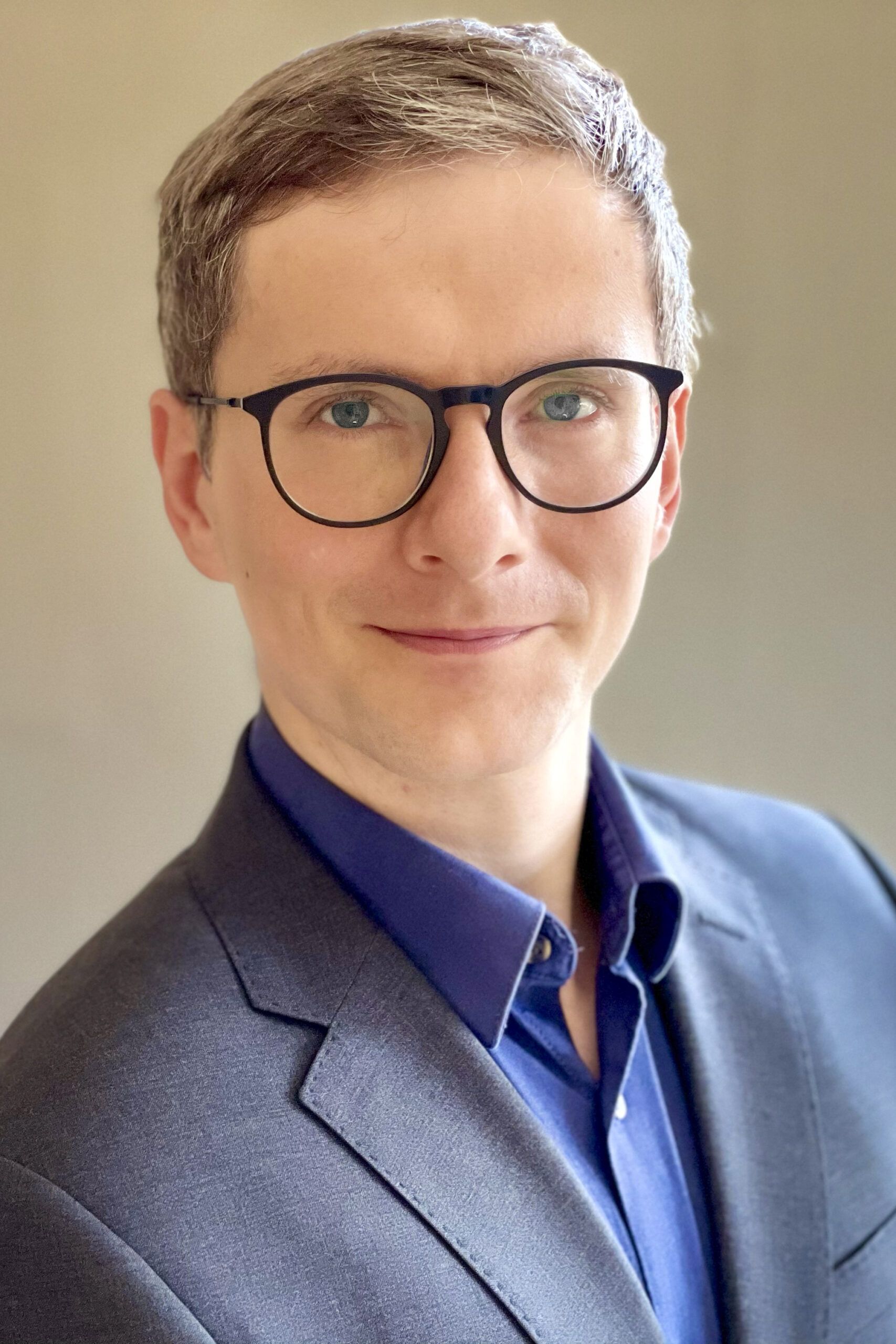
Jose Lorenzo Alvarez
MSc. Telecom. Engn.
Position: ESA Euclid Mission Mission Performance and Operations Manager
Lecturing: Space Optical System Management and Requirements Definition
Jose Lorenzo Alvarez is a systems engineer working at the European Space Agency Science Projects department. He was the Principal System Engineer and Instrument Manager for the Mid-Infrared Instrument (MIRI) in the James Webb Space Telescope. Currently, he is the Mission Performance and Operations Manager for the Euclid Project.
cv
2025 – present ESA ESTEC, Senior Manager, Independent Project Management Authority (IPMA)
2018 – 2025 ESA ESTEC, PLATO Mission, Performance and Payload Manager
2013 – 2018 ESA ESTEC, EUCLID Mission Systems Engineer
2018 – present ESA ESTEC PLATO Mission Performance and Operations Manager 2013 – 2018 ESA ESTEC, EUCLID Mission Systems Engineer
2010 – 2013 ESA ESTEC, JWST MIRI Instrument Manager
2006 – 2010 ESA ESTEC, JWST MIRI Systems Engineer
2003 – 2006 Brimrose Corporation of America – Optical Product Development Engineer
2001 – 2003 CIENA Corporation – Senior Passive Photonics Engineer
1999 – 2001 University of Maryland Photonic Switching and Integrated Optoelectronics Laboratory – Research Assistant
Education
2011 INCOSE Certified Systems Engineering Professional (CSEP)
1995-1999 MSc Telecommunications Engineering, Polytechnic University of Catalonia (Barcelona, Spain) – Optoelectronics Major
Space Optical Systems Management and Requirements Definition
Early in the lifecycle of projects Systems Engineering processes focus on the analysis of stakeholders needs and the definition of adequate requirements for the subsequent design and development phases. The lecture aims to describe the requirements engineering process with a focus on the analysis of science and user needs in typical Space Optical Instrumentation applications and the derivation of key optical system design parameters. We try to cover examples and practices to derive the most common types of requirements: geometrical , image quality, spectral, calibration and characterization and radiometric. In addition we will describe tools and methods to support completeness, traceability, verification and validation.
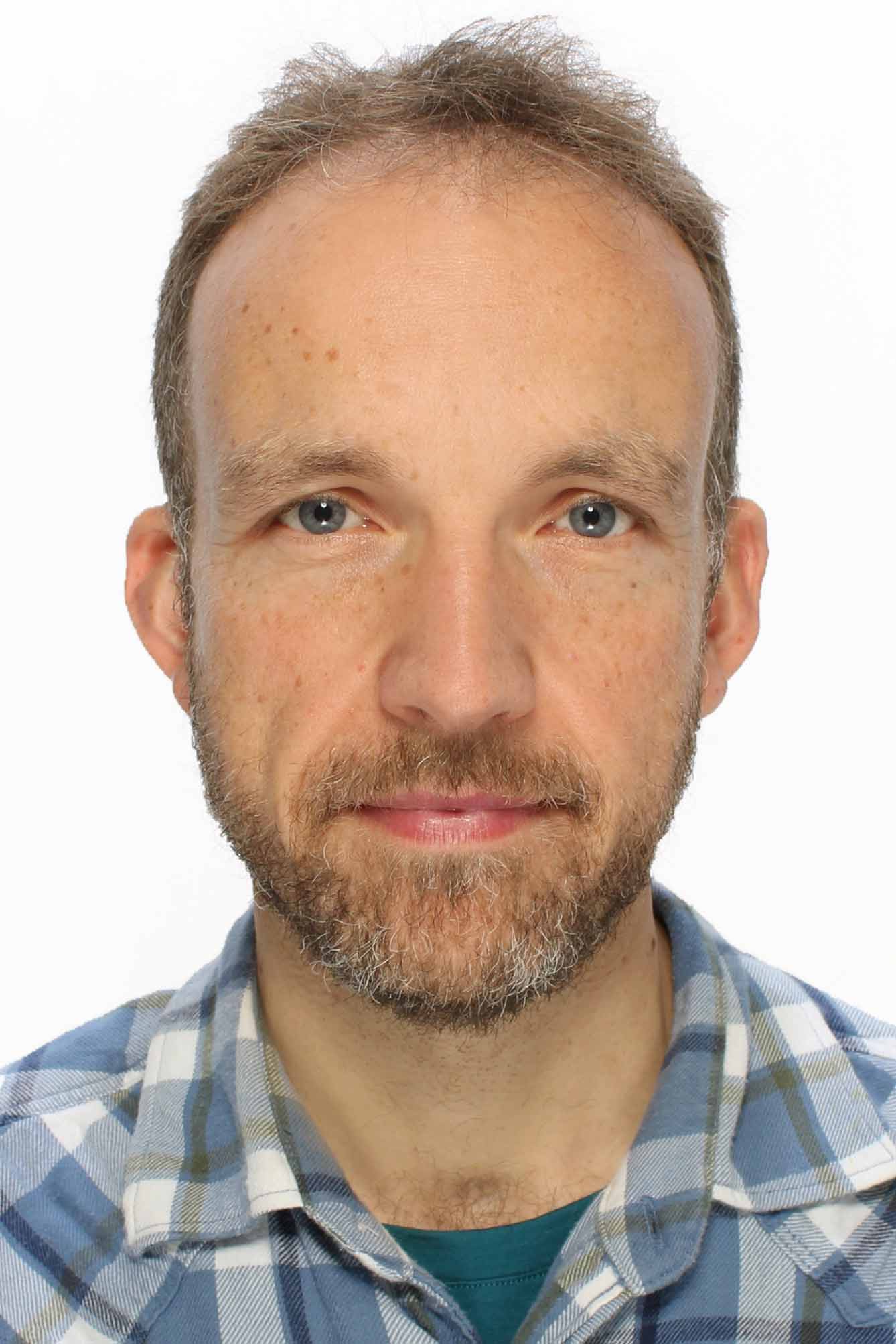
René Berlich,
PhD in Physics
>
Position: Optical Engineer at ESA/ESTEC
Lecturing: Straylight Modelling in Zemax
René Berlich is an Optical Engineer at ESA/ESTEC, where he provides technical expertise in the development of optical technologies and instruments for space applications. Before joining ESA, he worked at Fraunhofer IOF in Jena, Germany, developing advanced imaging systems and optical communication technologies.
His expertise encompasses a broad range of optical engineering disciplines, with particular emphasis on optical design and performance analysis for imaging instruments, spectrometers, and laser communication terminals. His course draws on practical experience gained through straylight analysis activities for missions including FLEX, Sentinel-5, SMILE, and Sentinel-2 Next Generation.
cv
2021– Optical Engineer, European Space Agency (ESA/ESTEC)
2013–2021 Research Associate, Fraunhofer IOF, Jena, Germany
2014–2016 Freelancer, Berlich Optical Systems Engineering,
Germany
2012–2013 Young Graduate Trainee, ESA/ESTEC
2014–2021 PhD in Physics, specialising in computational imaging, Delft University of Technology
2009–2012 Dual M.Sc. in Optics and Photonics, University of Central Florida and Friedrich Schiller University Jena
2006–2009 B.Sc. Physics, Friedrich Schiller University Jena
Straylight Modelling in Zemax (Optical Expert class)
This course introduces non-sequential straylight analysis for optical space instruments using Zemax OpticStudio. Using a simplified spectrometer concept, participants convert a sequential design into a non-sequential model and apply practical methods to identify and assess critical straylight paths.
Key topics include source and detector modelling, ray-tracing settings, baffling, ghost analysis, optical coatings, and surface scattering. Participants model micro-roughness and particulate contamination, apply point-source scattering distributions, and perform radiometric assessments using representative requirements and input scenes.
Guided exercises provide a structured workflow for selecting modelling approaches, interpreting results, and identifying dominant straylight contributors requiring mitigation or further analysis.
Dominic Doyle,
MSc. Science
>
Position: ESA-retired
Lecturing: Space Environment
Dominic is Irish and was born in Dublin at the start of the Space
Age in 1957. Since becoming intruigued with and fascinated by
Astronomy & Space during the NASA Apollo era, he pursued an
educational path in Science with a Diploma and Degree in applied
sciences from the Dublin Institute of Technology and Trinity
College Dublin, followed by a MSc in Atmospheric Physics from
Maynooth University, where he worked as a technical officer and
tutor.
He worked at the European Space Agency in the Optics section as
optical engineer since 1991. He has been responsible for
technology on telescopes, optical coatings, large mirrors,
contamination and cleanliness control, radiation effects on optical
materials etc.
As well as having been responsible for the optics testing lab at
ESTEC, he also supported the development of many ESA missions
in all domains.
cv
2021 – today Consultant on request, Committee member Association of Retired ESA Staff (ARES)
1991 – 2021 ESA/ESTEC senior optical engineer
1980 – 1991 Technical officer & tutor in Dept of Experimental Physics, Maynooth University
1987 MSc (Atmospheric Physics) National University of Ireland, Maynooth
1980 BSc & Diploma in Applied Sciences (Physics & Chemistry) Trinity College Dublin
Space Environment and Optics
The space environment is complex and must be considered and taken into account during all phases of space optical instrument design, development, manufacturing, and operation to ensure compliant performance can be achieved until the end of the mission. I shall describe the environment and its characteristics, the impact it has at system level and on optical materials and their properties, some details of the physics of the interactions, and methods and techniques for mitigation of radiation induced effects in particular.
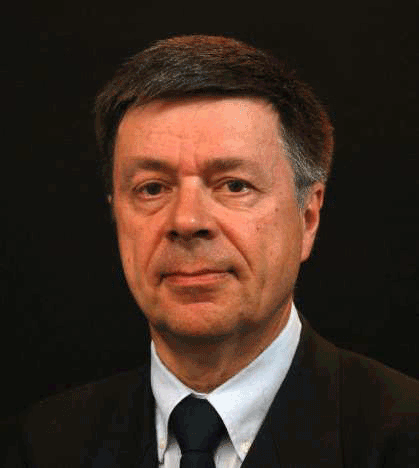
Roland Geyl,
MSc.
Optical Engineer
>
Position: President GEYL Optical Consulting and FO-RS Association
Lecturing: Introduction to Imaging Optical systems
Roland GEYL is an Optical Engineer graduated from Paris Orsay Institute of Optics. For more than four decades he contributed to most of the space projects at SAFRAN – REOSC either as lens designer, manufacturing and testing engineer, program manager, sales manager and plant director. He conducted various research in advanced optical systems and freeform optics and predesigned the SAFRAN SEEING offer of high performance payloads for nanosatellites. Today retired, he is offering consultancy services and acting as secretary of the French Freeform Optics association FO-RS.
cv
2023 – Today President Geyl Optical Consulting
2019 – 2025 President Freeform Optics – Research & Solution Association (FO-RS) in France, now secretary
2013 – 2022 SAFRAN-Reosc, France, Sales, marketing & Business Devt, Emeritus Expert
1999 – 2012 Sagem-Reosc, France, Sales Manager & Safran Emeritus Expert in High performance optics
1981 – 1998 Reosc, France, Lens design & Engineering / Optical manufacturing & Testing/ Program management / Division Manager
1982 – 2002 Lecturer in Lens Design at the Ecole Supérieure d’Optique, Paris-Orsay
1976 – 1979 Study at Ecole Superieure d’Optique (Major of promotion)
Introduction to Imaging Optical systems
The introduction to space-imaging systems will combine a review of historical and reference missions with lens-design aspects of Earth-observation instruments. Its purpose is to provide a broad understanding of the field. We will first review key principles of optical design and aberrations, adapting the material to the needs of both beginner and advanced students. The main objective is to offer a comprehensive overview of this complex subject without becoming overly focused on mathematical formulas, and to establish a sound starting point for successful subsequent optimization work.
The organizing committee will divide the students into two groups: beginners, with little or no practical experience using optical-design software such as Zemax, and more experienced participants who already have some lens-design practice.
ZEMAX course for beginners and advanced users
The Zemax course for beginners will provide a hands-on introduction to the software through simple, progressive exercises, accompanied by the relevant theory and formulas for each case. Possible topics include an achromatic doublet, variable air spacing, field flattening using a Smyth lens, an apochromatic triplet, a Petzval lens, a telephoto objective, a two-mirror telescope, and aspherical surfaces, depending on the time available.
The aim is to learn Zemax through practical work, completing the exercises together in a flexible and interactive format wherever possible.
For advanced participants, we will offer several more elaborate exercises. These should also provide an opportunity to exchange questions, answers, and both successful and unsuccessful design experiences among students and the lecturer. Student-specific lens-design questions and problems may also be addressed during the allocated time.
Tibor Agocs,
MSc. Engn. Physics
>
Position: Optical Engineer at ESA / ESTEC at TEC-MMO (Mechanical Department, Mechatronics & Optics Division, Optics Section)
Lecturing: System Budget Development
Tibor Agócs has more than 20 years of experience in optical design and analysis of optical systems. Currently, he is working as an optical engineer in the optics section (TEC-MMO) at ESTEC, ESA. He is supporting FORUM (Far-Infrared Outgoing Radiation Understanding and Monitoring) and KEYSTONE (limb sounding mission targeting whole-atmosphere chemistry) and he was also involved in Sentinel 3 NG and CO2M. He is the technical officer of various activities related to optical polishing technologies, additive manufacturing, metasurfaces, line of sight stabilization, chalcogenide materials and IR payloads. He is leading the TEC-MMO Optical Design Working Group at ESA, ESTEC. Before ESA, he was working at the at the NOVA Optical and Infrared Instrumentation Division for more than 10 years, where he was the lead optical designer of METIS, the Mid-infrared ELT Imager and Spectrograph for the 40m class ELT. He was also the optical designer of other ground based astronomical instruments (MICADO, MATISSE and Weave). He has strong experience in optical design and analyses and in performing simulations using OpticStudio, FRED, Python and Matlab for a wide variety of optical systems including freeform based optical systems.
cv
2021 – present Optical Engineer at TEC-MMO, ESTEC, ESA (NL).
2015 – 2021 Lead optical designer at the NOVA Optical & Infrared Instrumentation Division at ASTRON (NL).
2011 – 2014 Optical designer at the NOVA Optical & Infrared Instrumentation Division at ASTRON (NL).
2006 – 2011 Optical engineer and designer at the Isaac Newton Group of Telescopes on La Palma (ES).
2003 – 2006 Development engineer and optical designer at Holografika (HU).
1997-2003 Master’s degree in engineering physics, specialization in optics (Faculty of Natural Sciences, Budapest University of Technology and Economics).
System Budget Development
Proper tolerance analysis and budgeting are critical in space optical instrumentation to optimize system performance within constraints. By understanding how the various degrees of freedom in an optical system impact optical performance and creating allocations and building budgets, engineers can design robust systems that meet mission requirements while managing trade-offs between performance parameters. The lecture focuses on optical tolerancing and discussing allocations, budgets, and margin philosophy at various levels of the instrument. It also illustrates through examples how to create allocations for optical performance parameters and build budgets that are verified by optical analyses and tests in the verification phases.
IR Imaging Optics
This lecture provides a brief theoretical grounding in infrared imaging physics before diving into a hands-on Ansys OpticStudio practical session. After a short review of key IR concepts, most of the course focuses on modelling IR optical systems, building both lens-based and mirror-based configurations, and correctly implementing cold stops for detector shielding. Attention is given to thermal effects: modelling thermal self-emission from optics and structure and analysing the narcissus effect. The session is designed to give practical experience with the optical design tools and analyses used in real IR payload development.
Bernd Harnisch,
PhD Physics
>
Position: SOIDT Organization, ESA-retired
Lecturing: Spectrometer Design, Hands-on application
Bernd Harnisch worked 23 years at the European Space Agency in the Optics section as optical engineer. During his career he was responsible for technology developments on telescopes, spectrometers and lightweight ceramic mirror materials. Further on he was supporting the following optical flight instruments: GOMOS on ENVISAT, MSG, GERB on MSG, NIRSpec for JWST, MIRI for JWST and SEOSAT. Co-founder of the SOIDT course and programme manager of the SOIDT academic programme.
cv
2016 – SOIDT academic programme manager
1992 – 2015 ESTEC, optical engineer in the Optics section
1997 – 1992 Scientific Assistant in at Friedrich-Schiller University Jena
1985 – 1987 Academy of Sciences Jena
1981 – 1985 PhD in Holographic Interferometry at Friedrich-Schiller University Jena
1976 – 1981 study of Physics at Friedrich-Schiller University Jena
Spectrometer Design
In this lecture the design of optical spectrometer is explained. The general spectrometer set-up and the the basic formulas for the diffraction grating and the refraction prism will be recalled. Typical spectrometer configurations will be discussed and their advantages will be highlighted. The manufacturing process for gratings will be addressed. In an example the first order design process of an spectrometer will be shown: starting from the spectrometer requirements the grating line density and the focal lengths of the Spectrometer Collimator and Imager will be deduced.
Hands-on Activity
In the hands-on activity the participants will develop a spectrometer. Starting from a set of requirements they will perform the optical and opto-mechanical design, they will manufacture and integrate the spectrometer, verify the achieved performances and give a short presentation of the achieved results.
Jean-Christophe
Salvignol,
MSc. Engineer
>
Position: ARIEL Project Manager
Lecturing: Mechanical Engineering
Jean-Christophe Salvignol is the Ariel project manager working in the Science directorate of the European Space Agency. He leads a team in charge of the development of the Ariel mission aiming at the characterisation of exoplanets. Before that he was in charge of the development of the Euclid Payload Module composed of an all ceramic telescope and of two large instruments. He also acquired a solid expertise in mechanical engineering thanks to his positions of mechanical engineer in JWST and Rosetta.
cv
2019 – Ariel Project Manager
2012 – 2019 ESA, Euclid Mission & Payload Manager
2004 – 2012 ESA, JWST NIRSpec and MIRI Mechanical Engineer
2001 – 2004 ESA, Rosetta Mechanical Engineer
1992 – 2001 ATOS-NL Consultant in structural design and analysis for space programs
1986 – 1991 Engineering degree at Institute National des Sciences Appliquées
Mechanical Engineering
Designing an optical instrument or a telescope is a system job that requires solid theoretical knowledge of optics, but this is not sufficient! A good understanding of material properties, structural behaviour, thermal aspects, manufacturing, cleanliness requirements and the AIT process is mandatory to meet the required performances.
This course will aim at giving some basic knowledge about structural design & verification and (a bit) of materials. It won’t be sufficient to become a knowledgeable mechanical engineer but should at least allow the optical designer to understand the risks and potential issues and to discuss with mechanical experts when needed.
This lecture will address in particular:
– Basics of mechanics
– Mechanisms
– Threats to the image quality
– Materials
– Mounting Solutions
– Verification
Gerard Otter
MSc
Applied Physics
>
Position: TNO System Engineer / Architect
Lecturing: Space Instrument Calibration
Gerard Otter has been working on several space instrument since 1998 starting with the SCIAMACHY calibration at TNO. TNO has been involved in space instrumentation since the late 80’s with a strong focus on instruments for atmospheric chemistry. Within that Gerard has been involved in many developments starting from the early phases up to the launch as well as support during operations. Nowadays he is the technical lead in the earth observation program within TNO space systems engineering department.
cv
2022- lead engineer earth observation program
2018-2022 lead engineer calibration
2018-2019 NO2 payload Systems engineer for the CO2M phase A/B1, Calibration engineer Chime phase A/B1
2014- Calibration specialist for Sentinel 5 as part of core team Airbus DS
2011- Calibration engineer GOME-2 instrument involved in the in-orbit monitoring of the GOME-2 instrument on the MetOp series
2009-2010 Study manager Sentinel 4 calibration
2008-2010 Systems engineer for optical bench and calibration of the Sentinel 5 precursor (TROPOMI)
2007-2008 Study systems engineer Sentinel 4/5 phase 0
2006-2007 Systems engineer for electrostatic clamp design and manufacturing for the EUV alpha tool development for ASML.
2001-2011 Workpackage/Project management and system engineering of the GOME-2 calibration unit hardware development and instrument calibration activities, a project for the METOP satellites of EUMETSAT/ESA
1998-2001 Participated in the SCIAMACHY instrument calibration. Involved in several measurements campaigns. Developing analysis software. Performing the analyses of the polarisation response of the instrument
1998-2001 Worked in the Division Environmental Acoustics as a general scientist and subsequently as project manager and assistant account manager for the Dutch Ministry of Defence
Space Instrument Calibration
An instrument is as good as its calibration”. Each instrument is made to acquire information, but to understand this information we must understand the instrument. For that, the instrument needs to be characterized, leading to a good understanding of the behavior of the instrument. This understanding is then transferred into key parameters that can be used to calibrate the raw data into to useful physical products.
This requires a strategy for characterization and calibration for both on-ground and in-orbit characterization. The latter can lead to a calibration unit as part of the payload to monitor changes to the payload during the lifetime of the mission.
For an optical instrument, the three main aspects are radiometric, spectral and geometrical calibration. Radiometry also covers aspects like detector characteristics, stray light, and polarization (In some cases, polarization itself can be a product).
MSc. Thermal Engineer
>
Position: Thermal Engineer at ESA
Lecturing: Instrument Thermal Design and Analysis
Romain has 29 years of experience in Space Thermal Engineering, including 12 years in industry at Airbus Defence and Space (Toulouse), as thermal analyst and thermal architect for several Earth observation and Science instruments. Working now at ESA, he mainly supported Science projects (JUICE, SWARM, CHEOPS, Comet Interceptor…) and his main projects are now focus on Earth Observation (MetOp-SG and NGGM). He is also the Technology Focal Point at ESA for both Multi-Layer Insulations (MLI) and Phase-Change Material (PCM) thermal capacitors.
cv
– 2010-present: Thermal engineer at ESA, main thermal engineer for MetOp-SG and NGGM (Next Generation Gravity Mission), past projects (JUICE, Comet Interceptor, CHEOPS, SWARM, Sentinel 1, EDRS…)
– 1998-2010: Thermal engineer at Airbus Defence and Space (Toulouse, France), thermal architect of Sentinel 2 instrument, GAIA Focal Plance Assembly demonstrator, Herschel Telescope, support to several projects of Earth observation instruments, thermal analysis and tests for several projects (SPOT 5, Helios 2, Telecom satellites…)
Instrument Thermal Design and Analysis
Designing optical instruments, for space as well as ground applications, requires careful optimisation, at systems level, between the desired optical performances, and the mechanical stability and the coupled thermo-mechanical effects, but not limited to thermal expansion coefficients. Today most optical systems also comprises AO subsystems (Adaptive and/or Active Optics items) that again are sources of thermal loads, and induced stress and vibrations that further influences the ultimate optical performances.
For space instruments, vacuum, Sun radiation and even the Earth Albedo, depending on orbit, will influence the thermal behaviour of the instrument, often differently than on Earth and during performance tests.
Thermal aspects enter the Optical System design at many levels, hence the thermal performance optimisation require a constant and bidirectional interaction between the optical, the mechanical and the electrical engineers during the concept development, validation and testing phases.
This course chapter aims to review different coupled interactions of thermal behaviour on the optics, on the structure and on/from the related active and passive parts. Interactions via the respective material properties and choices, their design, assembly and dimensioning thereof, including approaches to minimise the thermal sensitivity of your optical system design will be presented.
Angela Piegari,
MSc. Physics
>
Position: Space Optics Advisor
Lecturing: Optical Coating Design
Angela Piegari has been working for more than 30 years in the field of optical thin films and coatings and she has been in charge of the Optical Coatings Laboratory at ENEA (Italian National Agency for New Technologies, Energy and the Sustainable Development). She has collaborated with many International Organizations and European Institutes, including ESA.
Editor of the book “Optical thin films and coatings” and author of more than 200 papers, she was also appointed as topical editor of the scientific journal Applied Optics and a fellow of the European Optical Society. She is presently acting as co-director of the biannual International School of Space Optics – ISSO.
cv
2022 – Space Optics Advisor
2010 – 2021 Research Director at ENEA
1994 – 2015 Responsible for the Optical Coatings Laboratory at ENEA
1977 – 1994 Researcher in the field of Optical Coatings
1977 Physics degree with honors
Optical Coating Design
Optical coatings are widely used in space instrumentation and in some cases they represent even the most critical elements of the instrument. A large class of coatings is based on interference phenomena that take place in layered structures; nevertheless the behavior of several coatings is essentially due to the materials properties. The selection of materials and the design of the coating structure will be described, depending on both the required performance and the operational wavelengths. Many types of coatings will be analyzed: high-reflectance mirrors, antireflection coatings, narrow-band filters, blocking filters, beam splitters, etc., highlighting the critical aspects. The effect of the angle of incidence and polarization, as well as the influence of the environment conditions will be discussed. Examples of applications in space instruments will be also shown.
Volker Kirschner
MSc. Physics
>
Position: Head of Optics Section, ESA
Lecturing: Straylight Analysis and Control, Hands-on Activity
Volker Kirschner is the Head of the Optics Section in the Technical Directorate of the European Space Agency. He leads a team of Optical Engineers supporting the development of passive optical instrumentation from the early conceptual design to final testing. In addition, he and his team define and run developments to push the limits of existing optical component technologies and to explore novel instrument concepts. His experience is based on his optical engineering support to numerous missions such as MERIS, Herschel, Planck, Sentinel-2 and Sentinel-5.
cv
2021 – Head of the Optics Section
2001 –2021 Optical Instrument Engineer at the European Space Agency, Noordwijk
1998 – 2001 Optical Engineer at Dutch Applied Research Organisation TNO, Delft
1997 – 1998 Young Graduate Trainee at the European Space Agency, Noordwijk
1996 – 1997 Research Assistant at Fraunhofer Institute for Applied Optics and Precision Mechanics, Jena
1989 – 1996 Study of Physics at Friedrich-Schiller University Jena
Hands-on Activity
In the hands-on activity the participants will develop a spectrometer. Starting from a set of requirements they will perform the optical and opto-mechanical design, they will manufacture and integrate the spectrometer, verify the achieved performances and give a short presentation of the achieved results.
Arvid Hammar,
PhD Optical Engineer
>
Position: Optical engineer LISA, Optics Section, ESA – ESTEC
Lecturing: Straylight – analysis and mitigation
Arvid Hammar is an optical engineer with experience in optical systems for the space and biometrics sectors. He currently works for the LISA mission, focusing on the performance of its optical benches. He also leads the TEC-MMO Straylight Expert Group at ESTEC.
cv
2026 – Optical engineer, LISA, ESA-ESTEC, Noordwijk, The Netherlands
2021-2025 – Optical engineer (TEC-MMO), ESA-ESTEC, Noordwijk, The Netherlands 2019-2021 – Optical system engineer, Fingerprint Cards, Gothenburg, Sweden
2011-2021 – Optics and antenna engineer, Omnisys Instruments, Gothenburg, Sweden
2010-2011 – Amanuensis, Terahertz and millimetre wave laboratory, Chalmers University of Technology, Gothenburg, Sweden
2009 Intern, High Energy Physics and Astrophysics, University of Florida, USA
Education
2011-2019 – PhD in optical instrumentation for Earth observation, Chalmers University of Technology, Gothenburg, Sweden
2009-2011 – Msc in Fundamental physics, Chalmers University of Technology, Gothenburg, Sweden
2005-2008 – BSc in Engineering physics, Chalmers University of Technology, Gothenburg, Sweden
Straylight – analysis and mitigation
Straylight is a recurring issue in almost every optical space mission. Predicting straylight performance requires detailed knowledge on a broad array of topics such as optical and mechanical design, coatings, surface finish, cleanliness, operational conditions, etc. Because of this complexity, straylight is often insufficiently addressed during the early stages of the development, potentially resulting in costly problems.
This lecture will introduce the main mechanisms responsible for straylight and discuss approaches for their mitigation. Straylight characterization and budgeting will be covered, together with practical examples illustrating different straylight mechanisms and their analysis using ray-tracing software. Strategies for efficient ray tracing and effective analysis of complex straylight problems will also be discussed.
Maurice Te Plate
MSc. Applied Physics
>
Position : ESA LISA Senior Payload Systems Engineer, ESA-ESTEC Noordwijk
Lecturing : Performance Verification
Maurice te Plate is an Optical Systems Engineer working at the European Space Agency (ESA). He is currently holding the position of LISA Senior Payload Systems Engineer. He is based at ESA-ESTEC in Noordwijk, The Netherlands. His main fields of technical expertise are physics and optics.
cv
2024 – Today ESA-ESTEC, ESA LISA Senior Payload Systems Engineer
2017 – 2024 NASA Goddard and ESA STScI, ESA NIRSpec Systems Engineer
2012 – 2017 NASA Goddard, ESA JWST System Integration and Test Manager
2003 – 2012 ESA-ESTEC, ESA JWST Optical System Engineer
2001 – 2002 ESA-ESTEC, Optical Engineer in the Optics section
1995 – 2001 TNO Institute of Applied Physics, Optical Engineer/Designer
1994 Abbott Laboratories USA, Optical Consultant
1988 – 1993 Master’s Degree in Applied Physics at Technical University of Twente
Performance Verification
In the world of space optical instrument design, proper optical performance verification is of pivotal importance. Maurice te Plate has extensive experience in this field. The lecture will describe the suite of optical performance verification techniques available to the modern optical engineer.
Jorge Fiebrich
> MEngn. Space Systems and Business
Position: Ariel Product Assurance and Safety Manager, ESA
Lecturing: Product Assurance for Optical Instruments
Jorge Fiebrich is the Ariel Product Assurance and Safety Manager working at the European Space Agency. He coordinates a small team of experts in the quality domain and is responsible for the overall spacecraft product assurance and safety activities. Product assurance activities are covering a wide range of activities such Quality assurance, RAMS, Materials and processes, cleanliness, radiation hardness and software assurance, all of which are required to ensure that the final product not only meets the requirements during the verification campaign but also keeps meeting them throughout the satellites lifetime.
cv
2020 – Today Ariel PA Manager
2018 – 2020 Solar Orbiter deputy PA Manager
2017 – 2018 MEeng. Graz University of Technology
2015 – 2018 PA manager of the ESTEC Test Centre
2014 – 2015 PA engineer for Lisa Pathfinder
2008 – 2014 AIT / Systems engineer at TNO (NL)
2005 – 2014 BEng. Electrical engineering, THRijswijk
Product Assurance for Optical Instruments
Developing an optical instrument for a space mission application requires a good understanding of the operational environment and constraints as sending a repair crew is normally speaking not an option. The optical performance of a systems is greatly dependent on the design, quality of manufacturing and the choice of materials, as even the best theoretical design can be thwarted by poor workmanship, uncontrolled processes or unsuitable materials and components. Product assurance aims to minimize the risk of adverse effects being introduced due to choice of wrong or not matching materials, uncontrolled or unverified processes and management of cleanliness levels. This lecture will address in particular:
Luca Maresi,
MSc. Theor. Physics
>
Position: SOIDT Organization, ESA-retired
Lecturing: Complex Procurement
Luca Maresi has more than thirty years of experience as Optical System Engineer for Space systems at Leonardo (Italy), Terma (Denmark), and ESA. He has worked on a number of large projects, such as Cassini, Rosetta, and Sentinel 5 Precursor. He has also initiated and managed groundbreaking projects, such as the Star Tracker 15AS at Terma, the Proba-V payload, and the HyperScout. In October 2013 he was appointed as Head of the Optics Section. Luca Maresi is the Chairman of the Symposium on Small Satellite Systems and Services since 2004. In 2016, together with Bernd Harnisch, he started the SOIDT.
cv
2021 – 2025: Lead Optical Engineer – Mechanical Dept. at ESA/ESTEC
2013 – 2021: Head of the Optics Section – Mechanical Dept. at ESA/ESTEC
2006 – 2013 Senior Optical System Engineer – Optics Section at ESA/ESTEC
2001 – 2006 Systems Engineer – Directorate of Industrial Matter and Technology at ESA/ESTEC
1996 – 2001 Senior Optical System Engineer – Space Division at Terma A/S – Denmark
1990 – 1996 Optical System Engineer – Space and Optics Division at Leonardo (formerly Officine Galileo) – Italy
1989 – 1990 System Engineer at Field Data – Italy
1989 Laurea in Physics – University of Milan
Faster, Better, Cheaper and New Space
Small satellites were at their dawn in the early nineties, when universities and space newcomers gained access to space thanks to the lower costs of small satellites. This period coincides with significant budget cuts of US expenditure for space. Dan Goldin, the NASA administrator from 1992 to 2001, initiated a revolution to transform America’s aeronautics and space program. Despite lower budgets, his Faster, Cheaper, Better approach has enabled NASA to deliver programs of high value. Since than the Faster, Cheaper, Better has remained as the mantra of small satellites. In more recent years, thanks to the maturity of space technology and lower cost of launcher, space has received the attention of venture capitalists. Start-ups have been formed to launch and operate satellites with a very aggressive schedule and low budget. How the Dan Goldin’s mantra “faster, cheaper, better” has impacted the way space systems are designed, manufactured, and tested? In New Space, a declination of the Dan Goldin mantra? What is the impact of new space on the process of deploying new space systems? Luca Maresi, with his experience of more than 30 years on small satellites, will address the above questions and present real-life experience of projects that responded to the needs Dan Goldin mantra and new space.